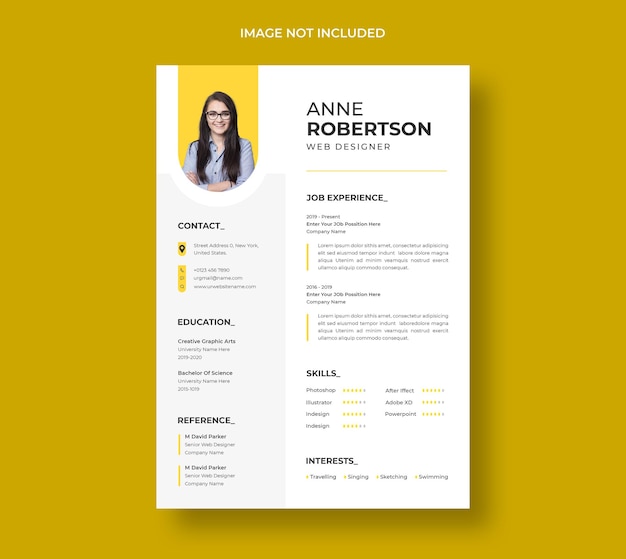
How To Write a Software Developer Resume
To craft an impactful software developer resume, you’ll want to highlight your strongest technical skills using tangible examples from your professional career. Although you want to list skills on your resume, you also want to show hiring managers how you’ve used various technologies and programming languages to execute specific projects.
Companies are drawn to candidates who have a proven track record of creating value for their teams and organizations. If you played an instrumental role in integrating new software architecture and infrastructure, you might want to emphasize the impact this had on the business’s ability to scale. These insights will go a long way in differentiating you from the competition during your job search. Throughout this guide, we’ll help you translate your technical skills and experience into an accomplishment-driven resume.
1. Write a compelling profile summarizing your qualifications
You’ll need to craft a compelling summary at the top of your resume to grab the hiring manager’s attention. The key to creating a strong professional profile is to create a snapshot of your career that illustrates your most relevant qualifications for the job. For instance, if you’re pursuing a software developer job that is centered around creating new features to enhance app functionality and drive user satisfaction, you should feature this experience directly in the profile.
Senior-Level Profile Example
A Lead Software Developer with 10+ years of experience developing innovative software solutions and applications for enterprise customers. A proven track record of building and leading diverse development teams throughout all phases of SDLC. Adept at coordinating with cross-functional stakeholders to execute multi-million-dollar technology projects.
Entry-Level Profile Example
A Software Developer with entry-level experience specializing in user interface design, application development, data security, and continuous improvement. Adept at identifying opportunities to enhance the user experience and develop new features to improve app functionality.
2. Add an accomplishment-driven professional experience section
Your professional experience section should be centered around specific accomplishments that demonstrate your technical expertise as a software developer. Hiring managers value candidates with keen attention to detail, so you’ll want to leverage hard numbers and data to establish a sense of scope for your software development projects. For instance, if you played a role in developing and launching a successful mobile application, you’d want to draw attention to the number of downloads or users.
Senior-Level Professional Experience Example
Senior Software Developer, Cadence Technologies, New York, NY
October 2017 – Present
- Oversee the design, development, and launch of innovative software applications for enterprise customer accounts valued at $400K-$1.3M, serve as the point of contact for stakeholders, and ensure alignment with business requirements
- Identify opportunities to automate manual testing processes, resulting in a 10% reduction in work hours and a 5% improvement in project delivery times
- Build, manage, and develop a team of 15+ software developers and engineers, oversee recruitment activities, coordinate project priorities, and provide mentorship to drive professional development
Entry-Level Professional Experience Example
Junior Software Developer, Doc Stock Inc., San Francisco, CA
June 2022 – Present
- Identify opportunities to develop new features and enhance the user interface for web and mobile applications impacting over 100K internal users
- Attend daily standups and Scrum meetings to discuss project roadblocks, status updates, and solutions and consistently achieved all project milestones
3. Include relevant education and certifications
Obtaining additional certifications is essential for advancing your career within the technology industry. Although your work experience will always be the determining factor, pursuing more certifications will help further illustrate your technical knowledge and skill sets. Agile, Scrum, and project management certifications are highly recommended, as these apply to any type of software development position you apply for.
Certifications
Template: [Certification Name], [Awarding Organization], [Completion Year]
Examples:
- Certified Software Development Professional (CSDP), IEEE, 2016
- Certified Scrum Master, Scrum Alliance, 2015
- CompTIA A+, 2013
Education
Template:
- [Degree Name]
- [School Name], [City, State Abbreviation] [Dates Enrolled]
Example:
- Bachelor of Science (B.S.) Computer Science
- UNIVERSITY OF SAN FRANCISCO, San Francisco, CA September 2018 – June 2022
4. List relevant key skills and proficiencies
As a tech professional, you already understand the value of automating common processes to increase efficiency. The hiring process is no different, as most companies rely on Applicant Tracking Systems (ATS) to scan resumes for specific skill sets and keywords. If your document lacks a certain number of key terms, your application may be rejected before it reaches the hiring manager. Incorporating key skills into your resume will significantly increase your odds of landing the interview. Below, you’ll find a list of key terms you may encounter during the job search:
| Key Skills and Proficiencies | |
|---|---|
| Agile Software Development | AngularJS |
| Application Development | Asp.net |
| Azure | Back-End Development |
| C# | Communication |
| Cross-Functional Leadership | Data Analytics |
| Database Management | Feature Development |
| Front-End Development | Java |
| Project Management | Python |
| Scrum | Software Development Lifecycles (SDLC) |
| SQL | Technical Project Management |
| Web Development | |